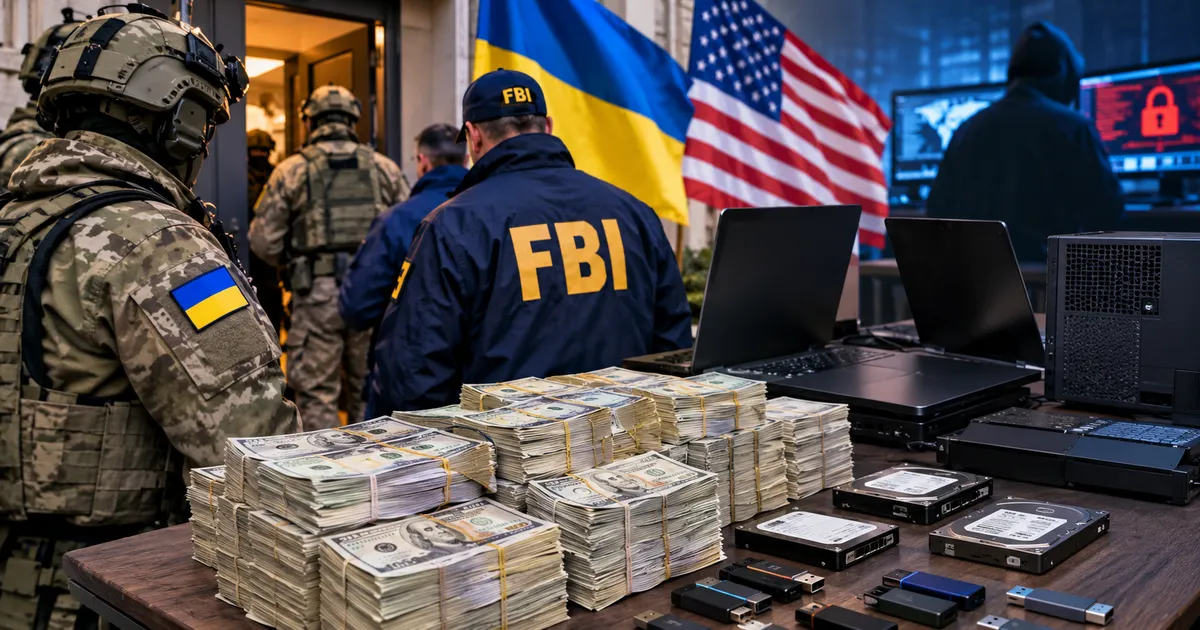
Four ransomware suspects detained in Ukraine after joint FBI operation
Ukrainian authorities, in cooperation with the FBI, placed four individuals in custody on suspicion of running an international ransomware outfit. The suspects were formally notified of the charges and face up to 15 years in prison under Ukrainian law.
Massive coordinated raids
Law‑enforcement teams executed 66 simultaneous searches across Kyiv and 11 other regions. The sweeps produced a haul of computers, mobile phones, bank cards, roughly $370,000 in cash and €20,000.
Public evidence of the operation
The National Police released a video that mixes raid footage, seized cash, on‑camera interviews and an audio clip of a ransomware extortion call demanding $15 million. The clip illustrates the classic “double‑extortion” playbook: threat of public data release unless a large sum is paid.
Why the arrests matter
Cross‑border cooperation between Ukraine and the United States sends a clear signal that ransomware groups can be pursued beyond their home turf. Seizing the infrastructure used for encryption, command‑and‑control and credential theft hampers the gang’s ability to launch further attacks.
Defensive takeaways for organizations
Even though the specific victims of this gang have not been confirmed, the tactics observed—large ransom demands, extortion calls, and the use of compromised devices—are familiar to many ransomware campaigns. Companies should:
- Maintain immutable, offline backups and test restoration procedures regularly.
- Implement a robust incident‑response plan that includes legal and public‑relations steps.
- Monitor network traffic for unusual encryption activity and for outbound connections to known ransom‑ware C2 domains.
- Educate staff about social‑engineering calls that mimic IT support, especially those that request credentials or remote‑access tools.
Staying vigilant and preparing for the worst can reduce the chance that a ransom demand becomes a costly reality.