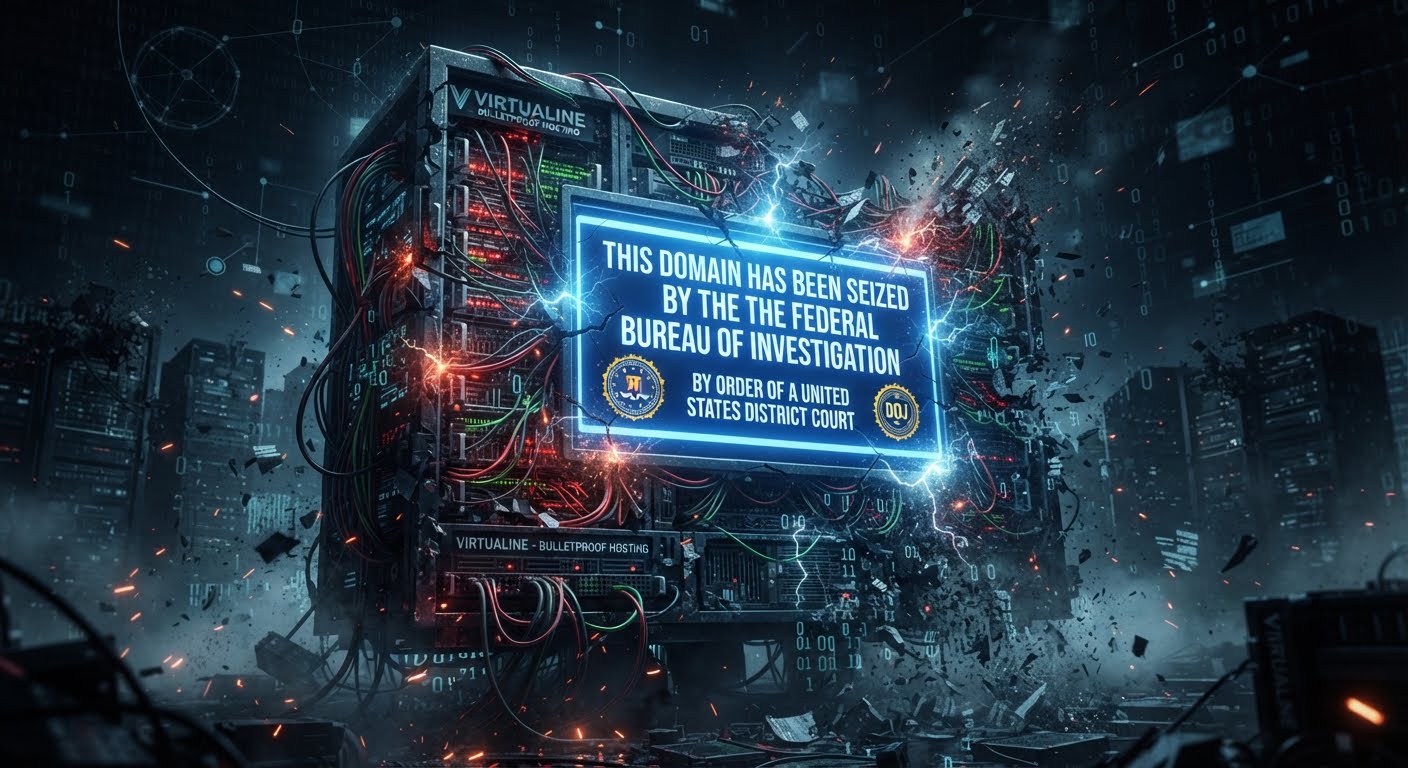
US seizes Virtualine’s primary domain
U.S. law enforcement seized virtualine.net, the flagship domain of the bullet‑proof hosting provider Virtualine, after a multinational investigation that also involved German, Dutch and U.K. agencies.
Why the takedown matters
The service was a hub for a wide range of illicit activities – from ransomware and phishing to the hosting of a child‑abuse forum that ignored repeated law‑enforcement notices. Cutting off its main domain removes a critical command‑and‑control and distribution point for dozens of criminal operations.
Service overview and illicit services
- Virtualine operated under the aliases Secury, Massgod, Spamhouse, Lanedo and Omegatech.
- The DOJ confirmed the provider marketed services explicitly designed for illegal use, including phishing kits, spamming tools, card‑ing infrastructure and port‑scanning capabilities.
- Authorities allege the platform knowingly hosted an online forum that promoted child‑abuse material, despite multiple complaints from law‑enforcement, NCMEC and a victim’s attorney.
- Even after the seizure, the administrator posted an open letter on a new site (virtualine.org) denying the allegations; the site was captured by Silent Push.
Financial flows and Bitcoin payments
Virtualine accepted direct Bitcoin payments, effectively laundering proceeds stolen elsewhere. Chainalysis linked its wallet addresses to ransomware operators, infostealer infrastructure, Russian‑language cybercrime forums, illicit shops, scams and phishing platforms. A TRM report broke down the cash flow: roughly 5 % came from ransomware groups, about 44 % from a Russian drug marketplace, with a large sextortion scheme and a cryptocurrency mixer also contributing sizable amounts. The StealC infostealer sent payments to Virtualine during the reported year.
Physical server seizure in the Netherlands
Dutch police in Limburg seized dozens of physical servers, taking hundreds of virtual servers offline and retrieving data belonging to more than 3,000 Virtualine customers. Follow‑up actions are still underway. Researchers note that the network prefixes formerly used by Virtualine now show minimal routing visibility, suggesting much of its infrastructure may be offline.
Implications for defenders
Organizations should audit any inbound or outbound traffic that references Virtualine’s former IP ranges or domain names. If you discover that assets were hosted on the service, assume they were compromised and conduct a full forensic review. Moving critical workloads away from any bullet‑proof host and enforcing strict egress filtering can reduce exposure to similar providers in the future.
Finally, keep an eye on cryptocurrency transaction monitors for payments to addresses previously associated with Virtualine – they remain a red flag for money‑laundering linked to ransomware, infostealers and other illicit services.